
Take What Works – Leave the Rest Behind
Years ago I was at an NZMBA conference (the New Zealand Mortgage Brokers Association — that tells you how long ago it was). The main speaker was “the Beechworth baker,” Tom O’Toole. He had a very different style to the usual conference speaker — almost Billy Connollyesque. I reckon he knew not everyone would warm to it.
But what he said in the first few minutes has stuck with me ever since, even though I can barely remember anything else from the talk (except a few bakery stories that aren’t exactly business gold).
He said: “Take what works, leave the rest behind.” In other words, grab the bits from my talk that are useful to you, and ignore the rest.
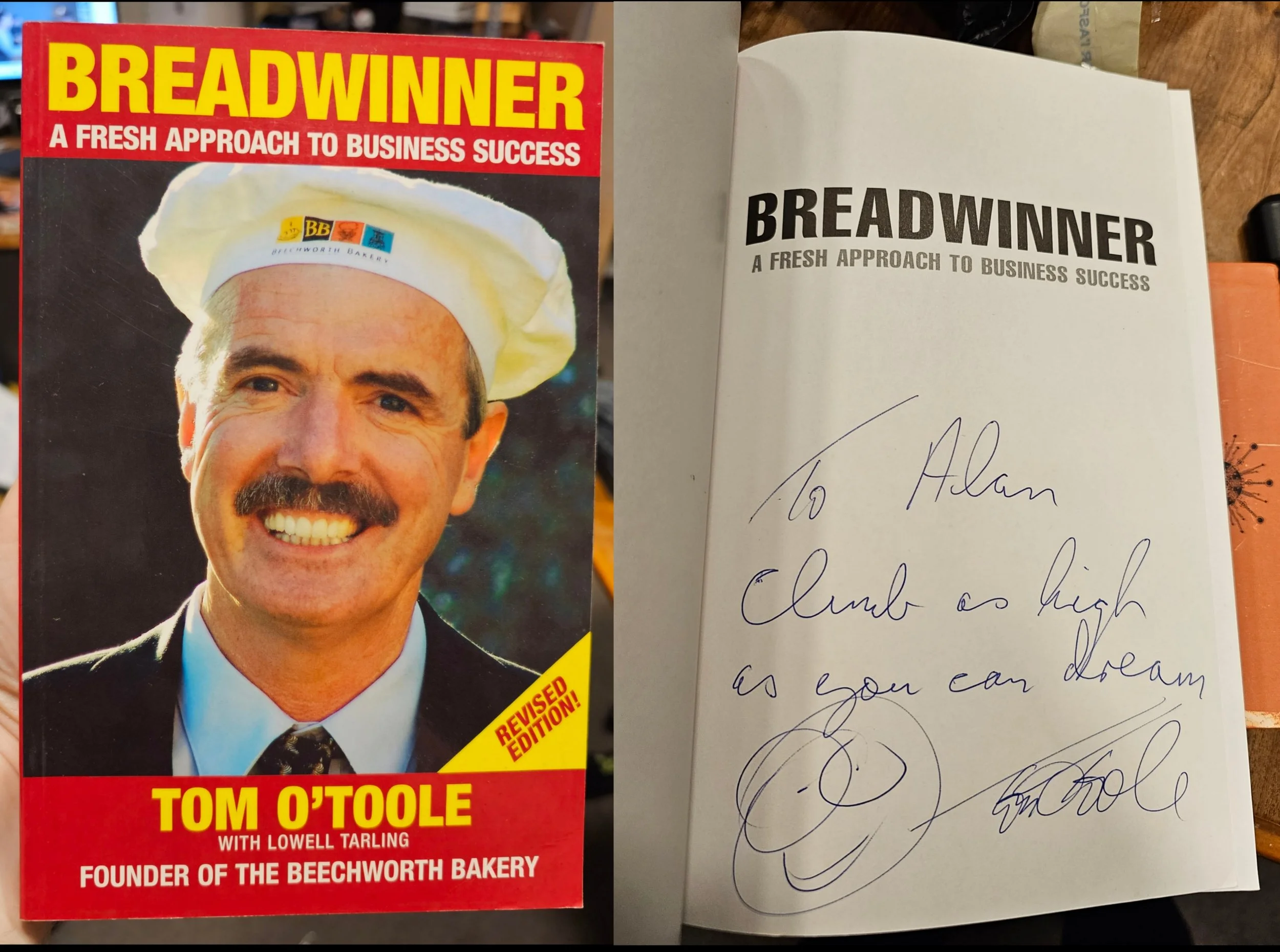
I also bought his book at the conference and he signed it. i need to reread this.
Why did that line stick? At first it just felt like a refreshing quote. Most speakers seem to want you to hang on every word and swallow their ideas whole. But Tom was giving permission upfront — if you get one useful thing, use it. If you hate everything else, that’s fine too.
That simple idea has shaped how I approach conferences, learning, and advice ever since. When I go to an event now, I’m not expecting wall-to-wall brilliance. I’m just hunting for one or two good ideas — or even part of an idea I can adapt and make my own. The rest? Irrelevant. I happily duck out when a politician starts speaking or some local proto-celebrity takes the stage.
I’ve spoken to other advisers who say they don’t bother with conferences anymore because “it’s a waste of time.” They go in expecting non-stop motivation or pure value, then feel let down. One bloke even got a bit miffy at me for leaving a conference at lunchtime. The morning had been excellent, but the afternoon looked pretty meh, so I headed off to sit somewhere quiet and think about the bits I liked.
I apply the same mindset to coaches and mentors I work with. I don’t always agree with everything they say. But I don’t burn the relationship over one disagreement. I take what works for me, leave the rest behind, and keep going. Often their contrarian view actually strengthens my own thinking. I don’t need yes-men.
I use exactly the same approach with my clients.
We advisers sometimes want to be the single font of all knowledge, with our perfect 27-step process that clients “should” follow. But people don’t always want that. They like doing things their own way.
I’ve got what I think is a frankly amazing budgeting system. Thousands of people have been through it over the years, and plenty still want to tweak it or do bits their own way. I could dig my heels in and demand they follow it to the letter. But it’s much easier (and smarter) to say: “Take the bits that work for you, leave the rest behind. If the hybrid version works, great — the system is still a success.”
I always add one caveat though: “If you find it’s not working doing it your way with bits of my system, are you okay with us going back and looking at using the whole thing properly?” You usually get easy agreement on that.
Rather than fighting clients, you let them lead a bit, make their own mistakes, and discover what actually fits them.
So have a think about how you approach learning and taking advice yourself — and how you give advice to your clients.
If you want some help with your business, give me a buzz. I’m here for it. And of course, if you don’t like what you’ve read here… take what works, leave the rest behind.
